
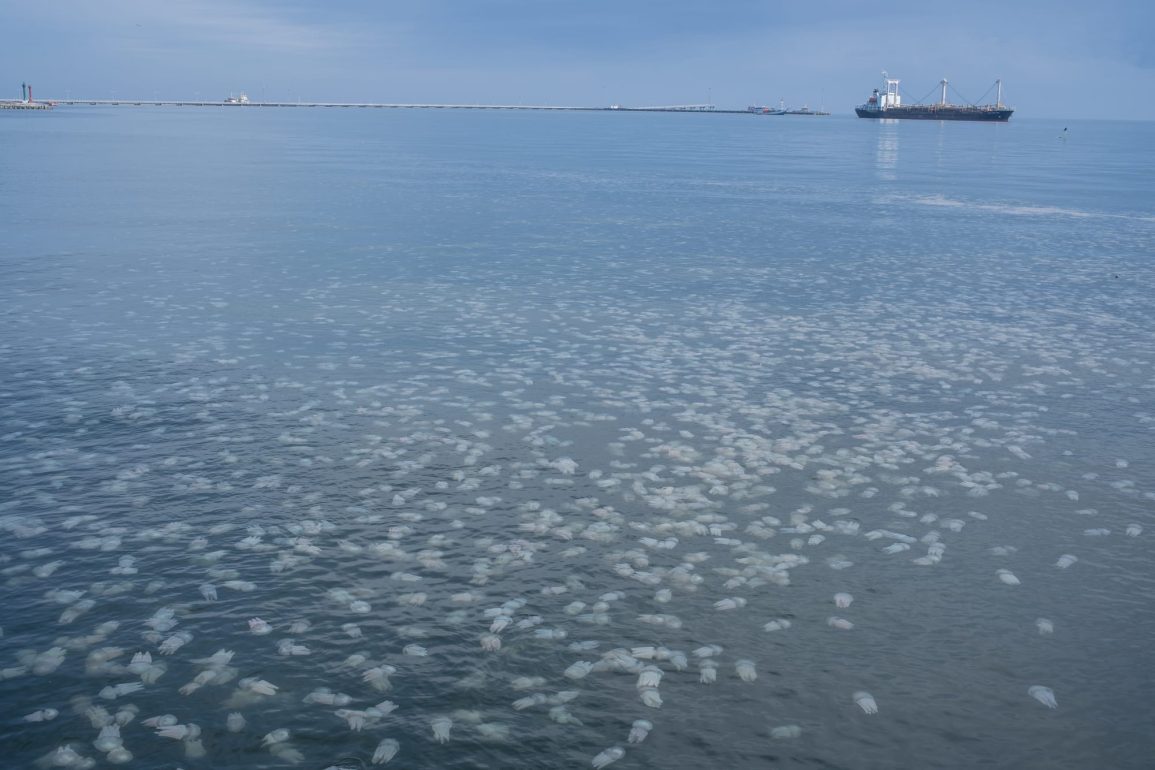

Jellyfish population explosion in the sea is not a good sign. This phenomenon shows the imbalance of the marine ecosystem. Rehabilitation efforts need to be done from upstream.
Jellyfish hordes were celebrating Ied Al-Fitr this year by filling up the Mayangan Beach, Probolinggo, East Java. Media reports stated the number of jellyfish reached millions.
However, this jellyfish’s appearance didn’t get a warm welcome. Mayangan Beach became deserted, as well as for tourists and fishermen who on a daily basis collects shellfish and “reket”, the local term for small shrimp which is usually used as raw material for fermented shrimp paste.
“It was challenging to shoot the fish because our sights were covered by jellyfishes. Even though the fish appear at high tide, there were also a lot of jellyfish at that time,” Said Solihin (27), one of the miteng or spear fishermen from Leces Sub-district, Probolinggo.
Solihin claimed that he could swim to a depth of 8-10 meters without any breathing equipment to shoot fish. Yet his ability became useless due to the jellyfish which filled up the surface.
That day, Solihin confessed that he could only catched few fishes, far from the time where there were no jellyfish to be found.
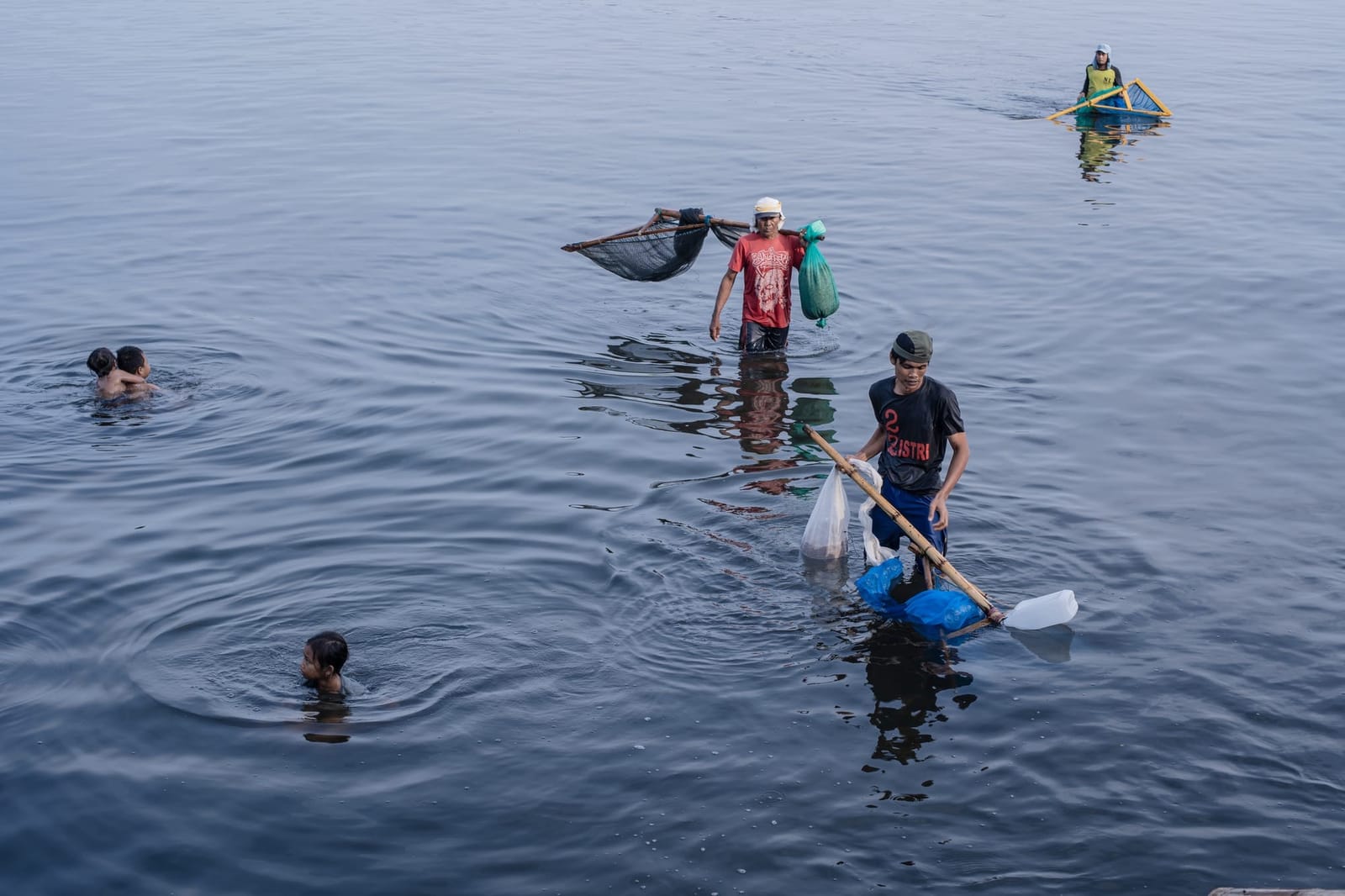 Coastal fishermen transport their catch of clams and “reket” (small shrimps which are used as fermented shrimps raw material) on Mayangan beach, Probolinggo, East Java.
“I catched rabbitfish, this is a type of coral fish that eats moss and there should be lots of them during the west wind season like this. I might as well just go back home, because it’s going to be hard due to the jellyfish,” said Hendro Wahyudi (38), a miteng whose house is near the Mayangan Beach.
Meanwhile, the shellfish and reket seeker got around this by waiting for the water to recede in the afternoon, when the jellyfish were brought back into the sea.
The existence of jellyfish on Mayangan Beach is not a new thing. The local residents noted that they usually appear once a year for a duration of up to one month.
Mayangan Beach is actually a bay between the land leveling from the reclamation of the Tanjung Tembaga Mayangan Port expansion project by the East Java Provincial Government in 2000, which has a high salt content. The location is oftenly become a tourist destination for “kungkum” or soaking because it is believed to cure various diseases such as calcification until gout arthritis.
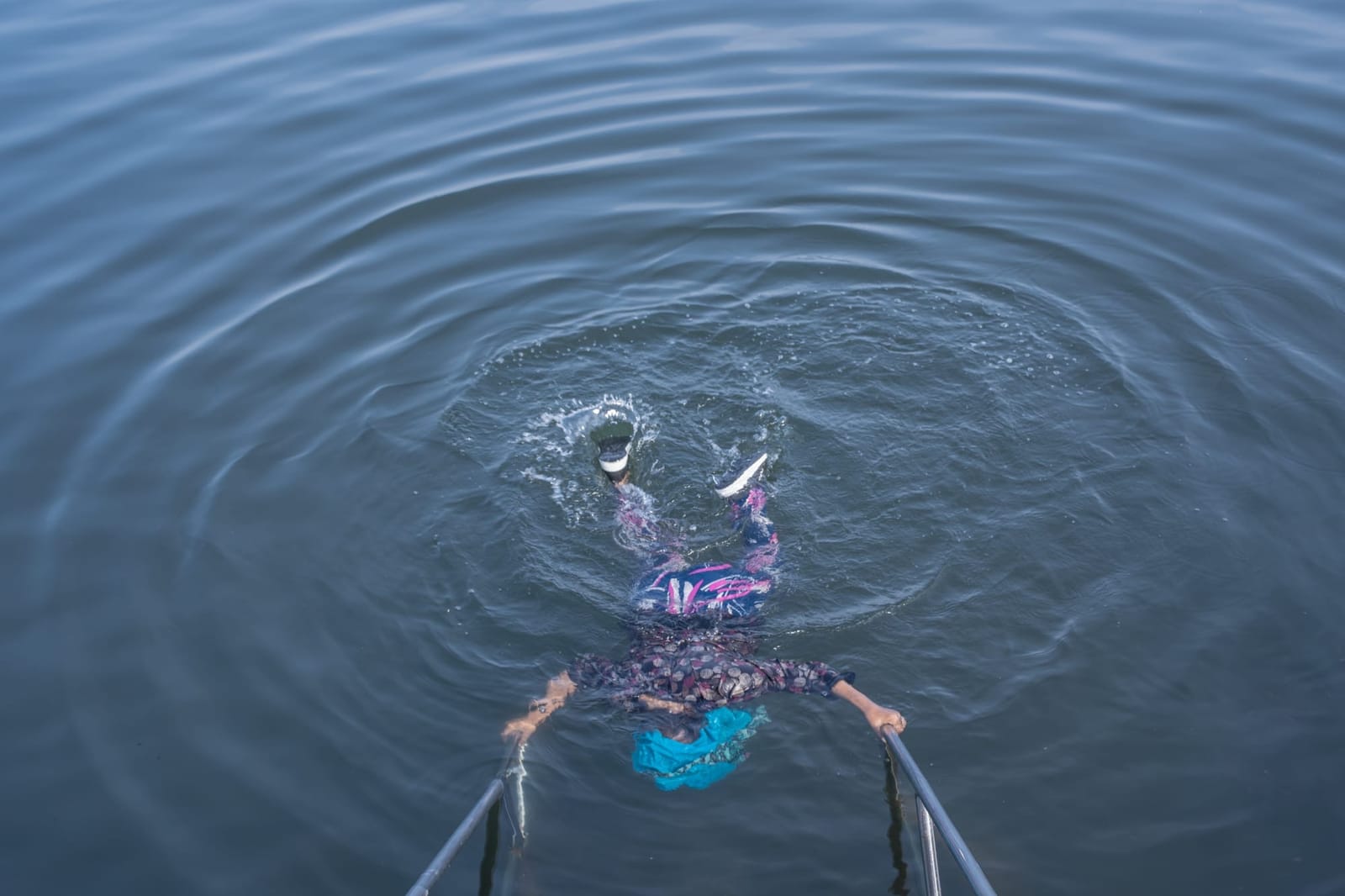 A woman swims while holding a handrail as calcification therapy in Mayangan Beach, Probolinggo, East Java.
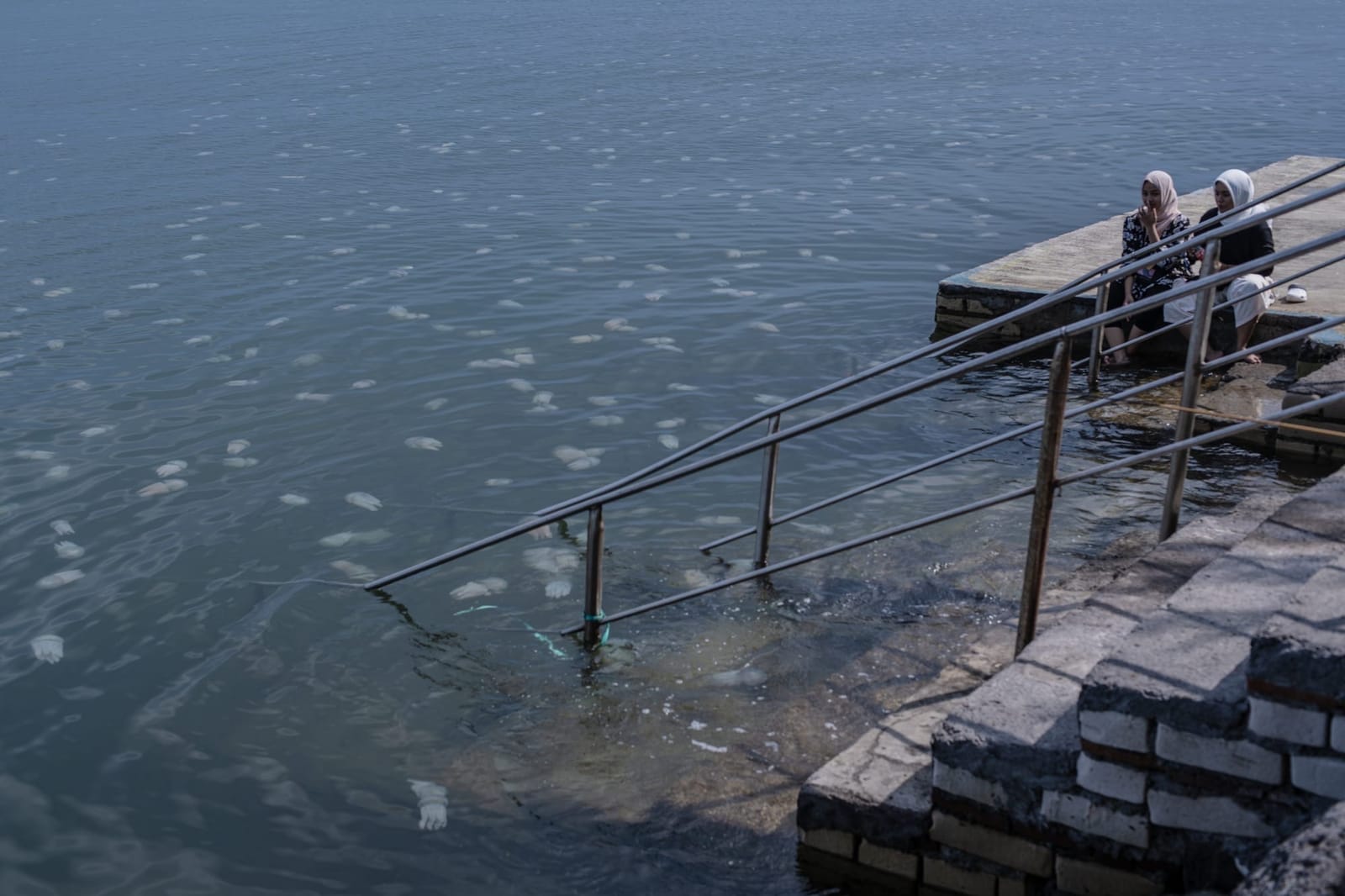 Two teenage girls soak their feet amongst jellyfish that fill the Mayang Beach, Probolinggo, East Java.
Impossible to Sail
Jellyfish invasion also forced the fishermen to abandon their boats.
Maryudi (48), a fisherman, said that not only was it difficult to sail, but the nets used for fishing would also only be filled with jellyfish.
Maryudi said that he had two fishing boats, and both were idle during the appearance of the jellyfish. From one boat, he can earn between IDR 100,000-150,000 per day. The other boat is operated by a partner with a profit sharing system.
“With the appearance of these jellyfish, the only way to continue working was for us to switch to fishing for shellfish, and even then we had to wait for the sea to completely recede and the jellyfish had returned to the middle of the sea,” Maryudi explained when contacted on October 5th, 2023.
According to Maryudi, his income has dropped drastically to IDR 10,000 – IDR 15,000 per day, because the interval between low tides until at least there are not too many jellyfish (dense) is usually very short.
According to data from the East Java Province Fisheries and Maritime Service (2020), the number of fishing vessels docked at the Mayangan Coastal Fisheries Port (PPP) reached 549 units, consisting of fishing vessels and fish transport vessels. These vessels range from small to large sizes starting from under 5 GT (gross tonnage) up to above 30 GT.
Maryudi, who is also the Chair of the Fisheries Supervisory Community Group (Pokmaswas), said that there was not much these small boat fishermen like himself could do, once the phenomenon of the jellyfish population explosion occurs.
”In the past 4 days there have also been jellyfish again, but not on a large scale like at the beginning of the dry season (April – May). So we can still go to the sea,” he added
Small boats with nets like his usually sailing under a mile from the shore with fish caught such as mullet, sea milkfish and shrimp.
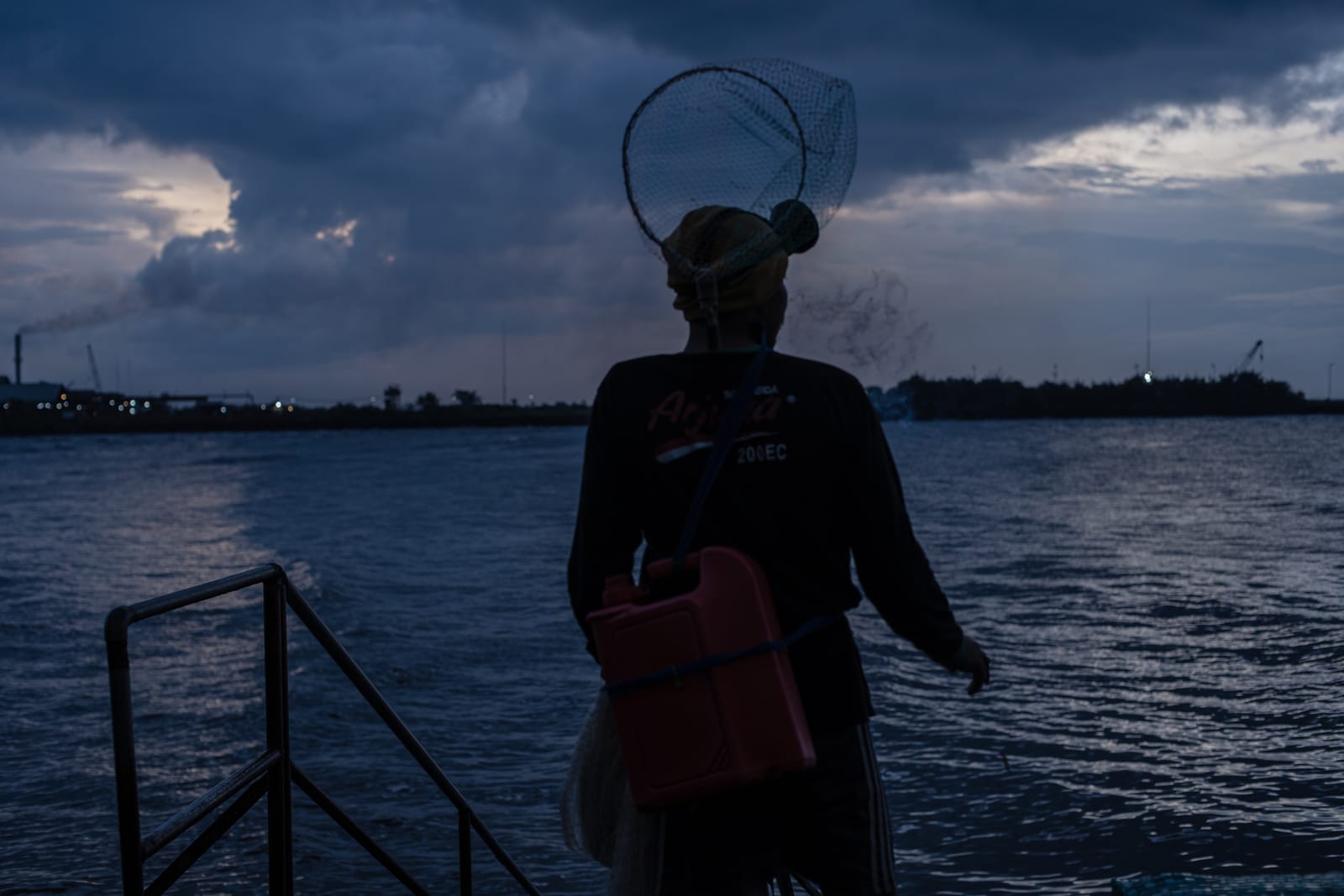 A coastal fisherman prepares to catch shellfish and “reket” (small shrimps used as raw material for shrimp paste) on Mayangan Beach, Probolinggo, East Java.
Mohamad (74), Leader of the North Coastal Fishermen’s Group, said the same thing, he and his group members cannot go to the sea as long as jellyfish fill Mayangan.
The problem then, switching to search for shellfish is also not easy, because according to him in one month to gather shellfish can only be done eight times, depending on the low tide. Reket shrimp also only appear in certain situations (seasonal), when the water is clear.
“In my area alone there are more than 20 boats, we are fishermen with a 12 meter boat with a 16 PK engine which can accommodate up to 6 people,” explained Mohamad.
When the season is favorable, they are able to catch krese fish and white fish, with a capacity of 4-5 kg per person. Their cumulative income is around IDR 720,000 – 900,000 per day shared for 6 people.
“The jellyfish hordes covered the sea, making a small boat couldn’t pass, even if I fished on the edge it was also difficult to get the fish,” complained this resident of Mayangan Village, Mayangan District, Probolinggo City.
“We don’t understand what causes these jellyfish to appear, maybe it’s climate change.”
Jellyfish and Ocean Imbalance
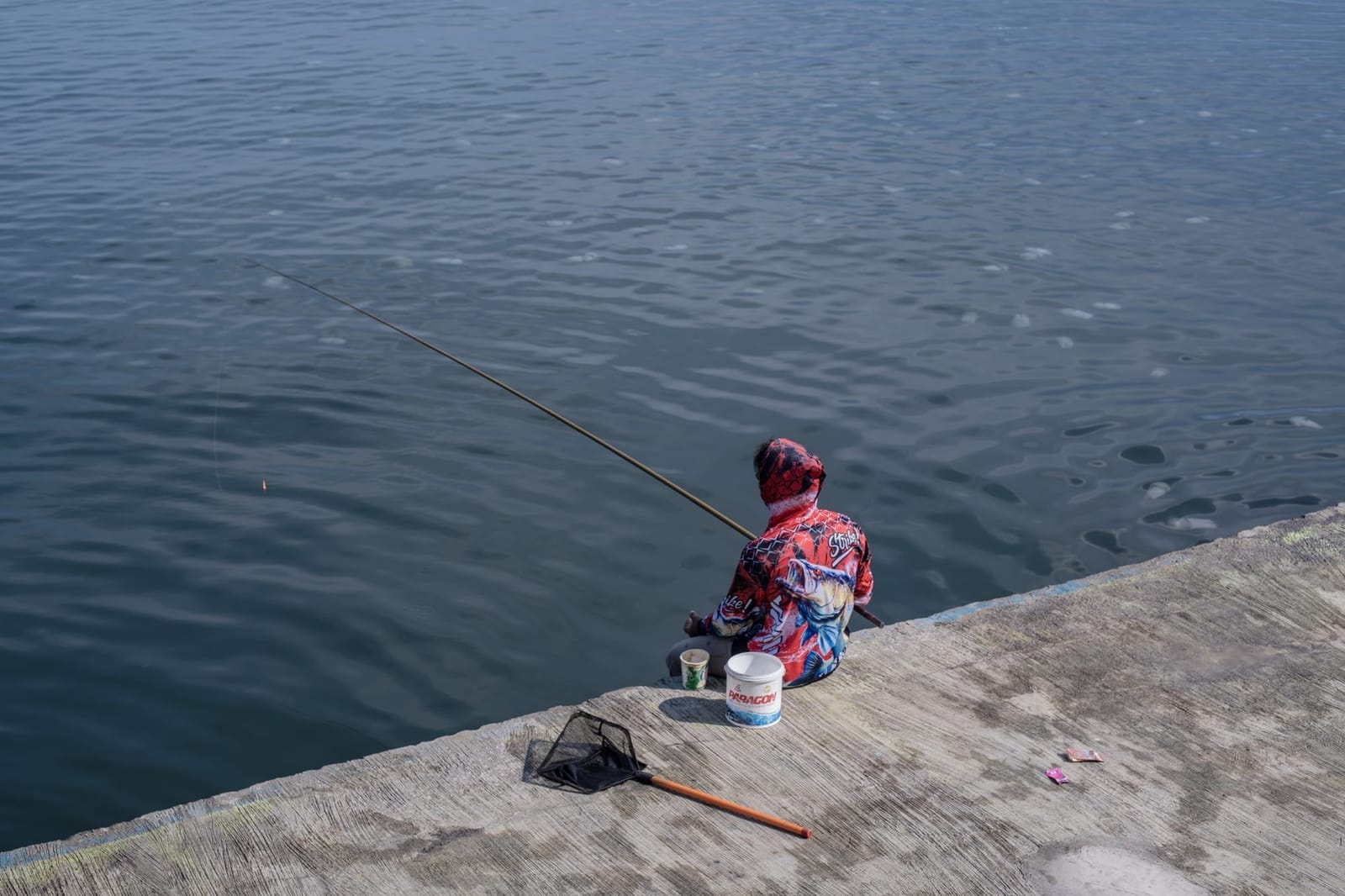 A fisherman waits for his bait to be eaten by fish among the jellyfish at Mayangan Beach, Probolinggo, East Java.
Probolinggo is not the only place where jellyfish appearance phenomena occur. In October 2018, in the Jakarta Bay, there were similar phenomena seen. Interestingly, the appearance of Jellyfish in Jakarta Bay occurs towards the end of the dry season, while in Probolinggo it occurs at the end of the rainy season. However, this pattern almost always repeats itself every year.
Mochamad Ramdan Firdaus, staff of the Research Center for Oceanography-Indonesian Institute of Sciences (now National Research and Innovation Agency or BRIN), said that there are four causes of the jellyfish population explosion, namely overfishing, climate change, oceanographic dynamics, and eutrophication.
Eutrophication is a condition where there is an excessive increase of nutrients in the waters, resulting in a rise in chlorophyll content, with the addition of high salt levels in the sea.
Eutrophication also causes the growth of phytoplankton which jellyfish have a fondness for. The explosion in the phytoplankton population also increases the chances of anoxic conditions (a state without oxygen) that most other organisms cannot tolerate, but on the other hand jellyfish can still survive.
A number of studies have found that Jellyfish have been on this planet for half a billion years, even before the dinosaur’s era. In contrast to many other marine animals that suffer from marine pollution and global climate change, jellyfish are actually experiencing a significant increase in their population. The higher the level of marine pollution, the more their numbers increase.
Without blood and brains, jellyfish can survive on low oxygen levels. Once the jellyfish take over, their habit of consuming fish larvae makes it difficult for other species to colonize the area, even after oxygen levels return to normal.
Widodo Setiyo Pranowo, Principal Expert Researcher at the Centre for Climate and Atmospheric Research (PRIMA) of the National Research and Innovation Agency (BRIN), stated jellyfish prefer the sea temperatures between 2 -31 degrees Celsius. Likewise with the salt content, around 30-35 PSU.
He noted that the salt content in Jakarta Bay is around 30-32 PSU, while the Madura Strait is around 32-34 PSU. The lower salt content in Jakarta Bay means that more fresh water supplies come from the land.
The fresh water that flows into Jakarta Bay originates from 13 rivers that end in the area. Meanwhile, the Madura Strait has far fewer river mouths. One of the river estuaries that provides a significant supply of fresh water in the Madura Strait is one of the Brantas River branches, the Porong River.
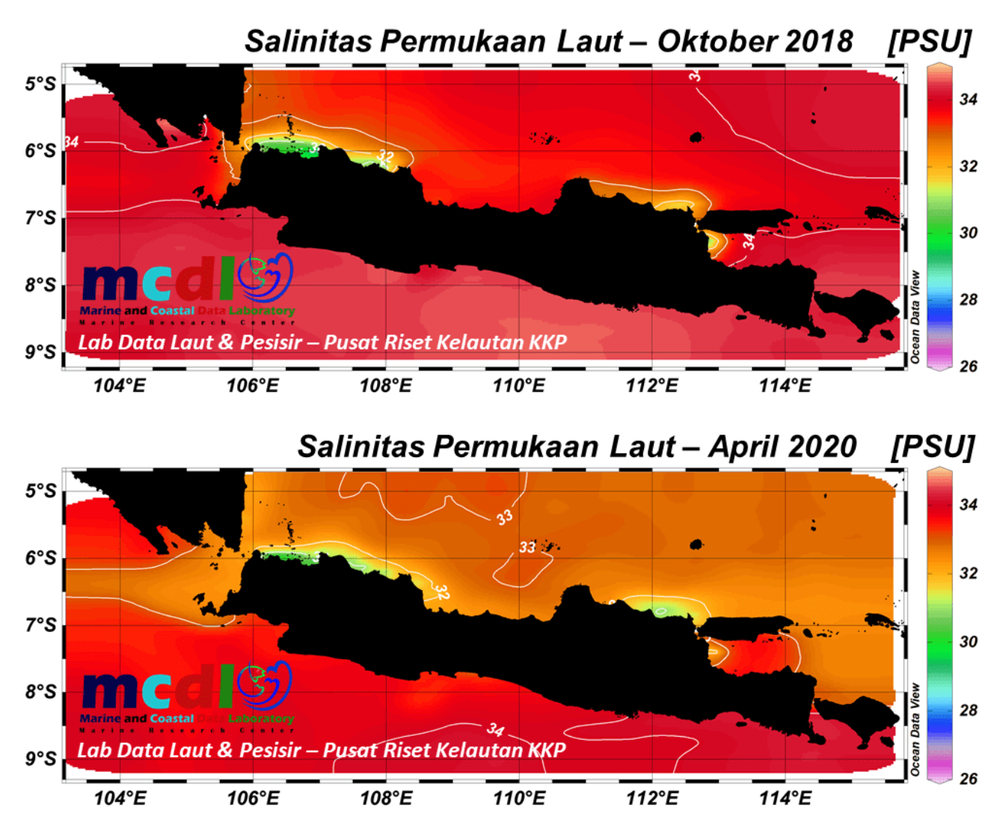 Comparison of sea surface salinity in October 2018 and April 2020.
“Rivers that flow into the sea, apart from bringing fresh water from the land, also carry nutrients (chlorophyll). These nutrients are very useful for phytoplankton to grow and reproduce. If there are more nutrients, there will also be more phytoplankton,” Widodo explained.
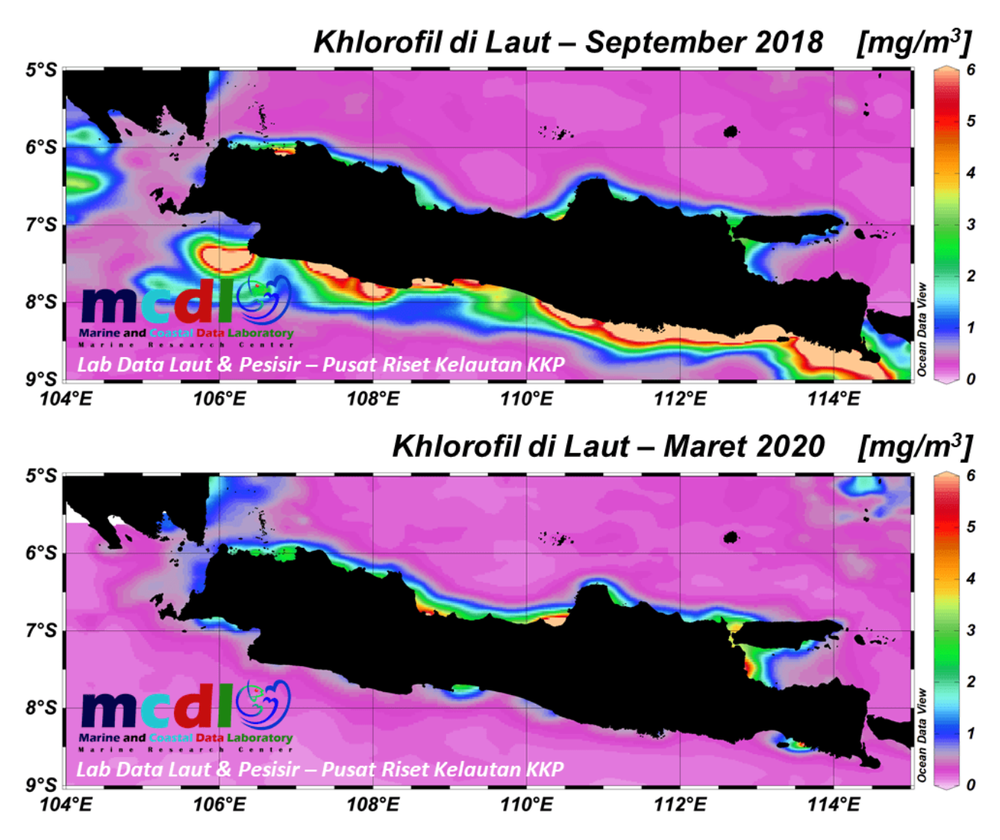 Comparison of chlorophyll in the sea September 2018 and March 2020.
Nanik Retno Bawono, lecturer at the Faculty of Fisheries and Marine Sciences, Brawijaya University, Malang said there needs to be a deeper analysis to see whether pollution of the Brantas River is one of the causes of the jellyfish population explosion.
“The main source of sea pollutants is mostly from river flows. In my opinion, apart from the atmosphere or the sea itself, what needs to be analyzed is the main source of intake that comes from rivers that empty into the sea. That’s a possibility that could cause the jellyfish to bloom,” explained Nanik in her office early July.
Nanik added that jellyfish and phytoplankton growth is closely related to the concentration of nitrate and phosphate in sea waters. The high availability of nutrients such as nitrate and phosphate can cause eutrophication.
When eutrophication occurs, jellyfish populations can explode because their diet is phytoplankton – abundant. Therefore, monitoring and managing nitrate and phosphate concentrations in marine waters is important to control jellyfish overgrowth and maintain the balance of marine ecosystems.
Source of Brantas River Pollution
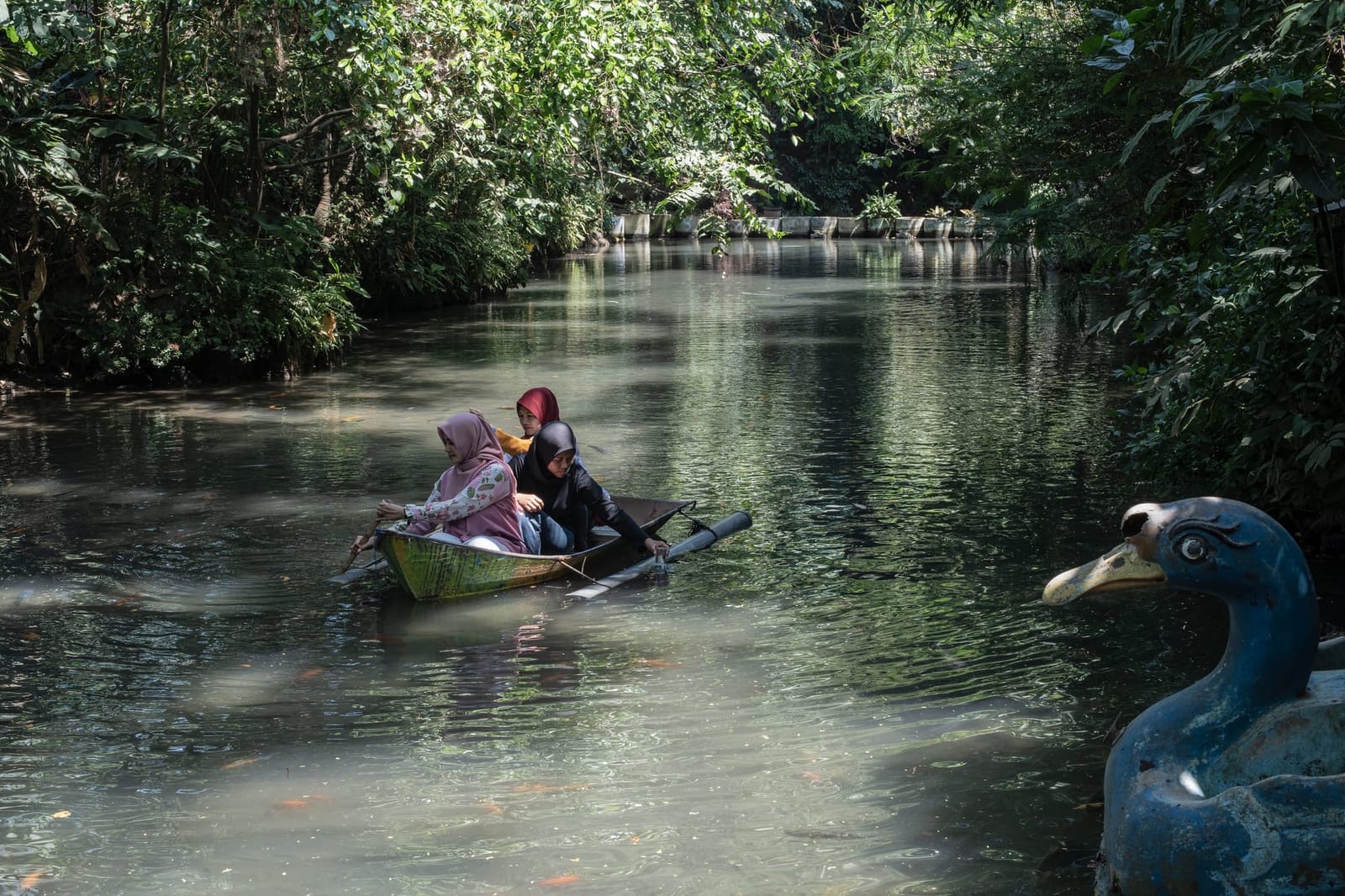 ECOTON staff and volunteers collect water samples to examine their content at Sumber Banteng Spring Tourism, Kediri City, East Java.
Nanik and her students are in the middle of her research related to Brantas River pollution which is thought to originate from microplastic content. This research is called Miber (Microplastic in Brantas River). They have conducted microplastic surveys in the Brantas River, in several locations from upstream to downstream, which includes various cities such as Batu, Malang, Mojokerto and Surabaya.
This research aims to understand the extent of microplastics spread in the Brantas River area and how this pollution affects the river and marine ecosystems associated with it. One suspicion is that the spread comes from fertilizer.
According to Nanik, some types of fertilizer contain microplastics in the form of micro pellets or plastic microparticles which are added to increase the efficiency of fertilizer application.
“However, it is important to remember that the use of microplastics in fertilizer also raises concerns regarding environmental and health impacts. These microplastic particles are capable of polluting soil and groundwater, furthermore their potential to enter the food chain through plants and animals,” she explained
Adi Setiawan, Brawijaya University Agricultural Cultivation Lecturer, sstated fertilizer use in Malang, Blitar, Tulungagung, Kediri and Mojokerto areas is indeed over-the-top.
Adi explained, the potential for loss of urea due to leaching from irrigation tap reaches 60 percent. “If the average need for urea/za per hectare per rice planting season reaches 300 kg, and up to 60 percent is dissolved, naturally this is a considerably large amount if it accumulates,” added Adi.
According to the data from the Brantas River Basin Center (BBWS) Ministry of Public Works and Public Housing (PUPR) in 2022, rice fields along the Brantas River Basin (WS) reached 382.074 hectares.
The Brantas River itself has received National Strategic status – managed directly by the Ministry of Public Works and Public Housing (PUPR). The Brantas WS area reached 14,103 Km2 or 29.42% of the area of East Java Province (47,922 Km2). The Brantas Watershed has 220 river basins (DAS), the largest one covering an area of 11,888 km2.
“Well, it could be that this abundant plankton phenomenon is not only from the Brantas River, because the flow of the Bengawan Solo River which passes through Lamongan and Gresik uses more urea which is spread directly into fish ponds. If this is really dissolved in water,” added Adi.
Brantas Surveillance and Community Role
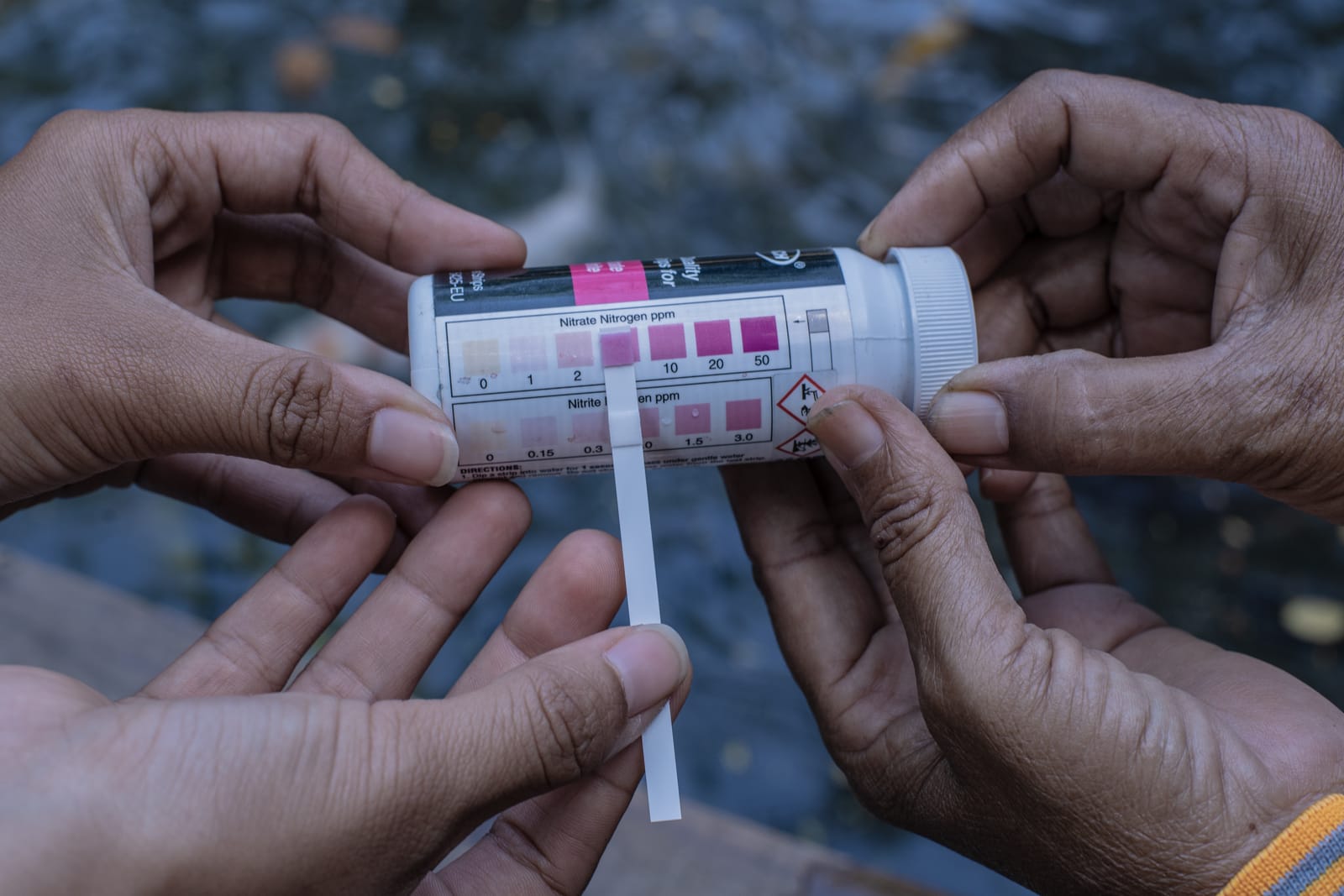 ECOTON staff and volunteers test the water sample for its chemical content at Sumber Banteng Spring Tourism, Kediri City, East Java.
One of the initiatives to monitor the water quality of the Brantas River comes in the form of the Brantasae program, a portal to accommodate the water quality of the Brantas River report, involving communities and volunteers.
This project is a collaboration between Brawijaya University and the Department of Water Management Delft University of Technology (TUDelft) and Hanzehogeschool Groningen from the Netherlands.
Reza Pramana, TUDelft Water Resources Management research staff, said that Brantasae is an effort to expand community participation and also become a place for collaboration between individuals or other organizations who have similar interests.
“One of the steps is to further expand information access about water. This can be done by accessing existing resources and initiatives,” Reza said, last June.
Apart from building a website, TUDelft also distributed equipment for volunteers to check the water quality in the Brantas River.
“In the Netherlands, there was a waste problem everywhere, if I’m not mistaken, it took them 30 years to solve it,” said Reza, while adding that his party was optimistic that change could occur even though it required a long process.
Aside from community efforts, the government’s role is also important in monitoring Brantas River pollution.
Azis, ECOTON’s Deputy for External Affairs and Partnerships, a conservation institution that focused on river cleanliness, admitted that his party was disappointed with the Kediri City Government, East Java because their minimum involvement in environmental conservation efforts.
“We seemed to be left alone, even though we helped create programs several times in Kediri City in collaboration with DLH (Department of Environment, Hygiene and Parks) to create a Zero Waste City pilot project in Tempurejo Village,” said Azis, last June.
“There is no follow-up and there was neither involvement nor technical support.”
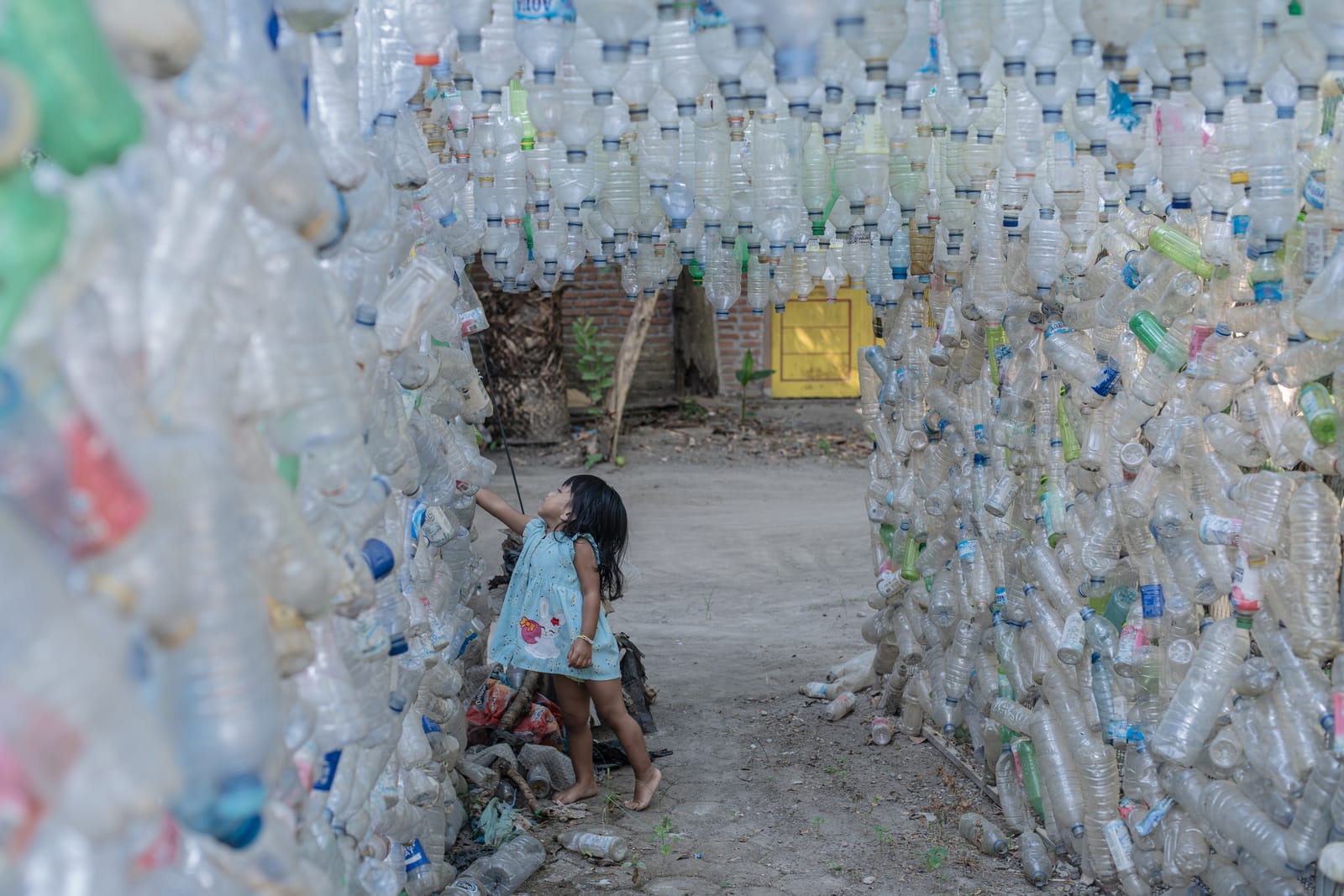 A little girl tries to reach bottled water installation at ECOTON’s ground, Gresik, East Java.
Zero waste city pilot project in Tempurejo Village,done through reusing and sorting all products and packaging. Without burning or burying it carelessly which could pollute the land, water, or air and threaten the environment and health.
In a characteristic study of waste in Tempurejo Village, it was found that around 59.7 percent of the total waste was organic waste, around 16.4 percent could be recycled, and the remaining 23.9 percent was residue. Tragically not all can be processed or thrown to the Final Processing Site (TPA). The reason is, there is still waste being thrown into the river.
Kediri City is considered strategic because its territory is divided by the Brantas River which runs from South to North. So it is not surprising that there is a common term among the people of this city which refers to the area as East of the River or West of the River.
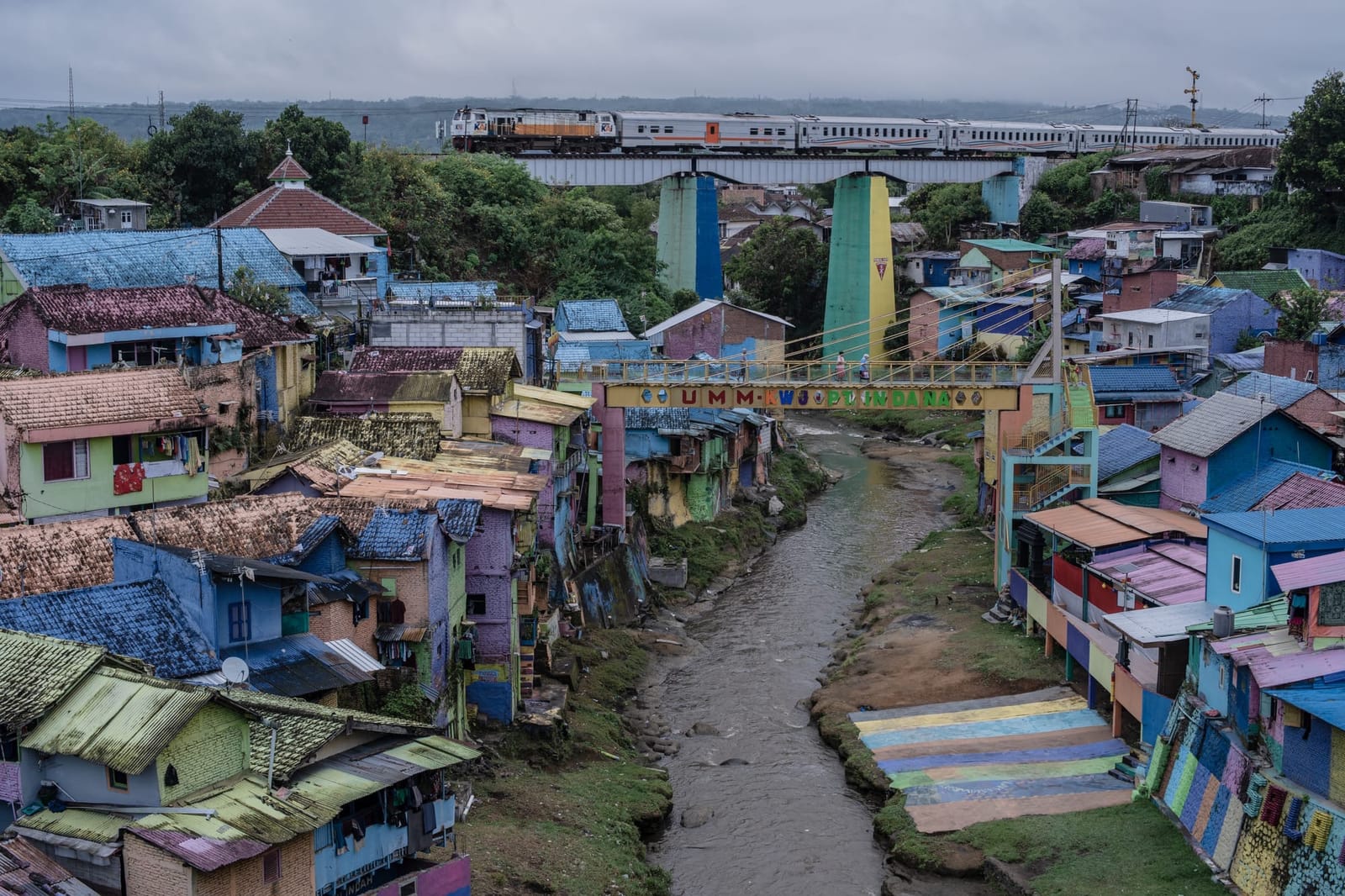 Brantas River divides Warna-Warni Village (colorful village), Jodipan, Malang, East Java.
Chevy Ning Suyudi, Head of the Kediri City Regional Development Planning Agency (BAPPEDA), said that the city government has a roadmap for handling waste. However, that roadmap is not yet fully able to solve the existing waste problem. With a population of 289,418 people, Kediri City’s waste reaches 140 – 150 tons per day.
This is because waste in the city covers an area of only 63.4 km2 and with a population of 289,418 people, Kediri City’s waste reaches 140 – 150 tons per day.
“Actually, if we maximize the role of independent waste groups (KSM) and build 5 Reduce, Reuse, Recycle (TPS3R) waste disposal sites, the city of Kediri will be waste-free or zero waste,” said Chevy when met at his house, June 11th 2023.
Chevy agrees that the pollution problem in the Brantas River is not only related to how the government prepares facilities and infrastructure towards a zero waste city.
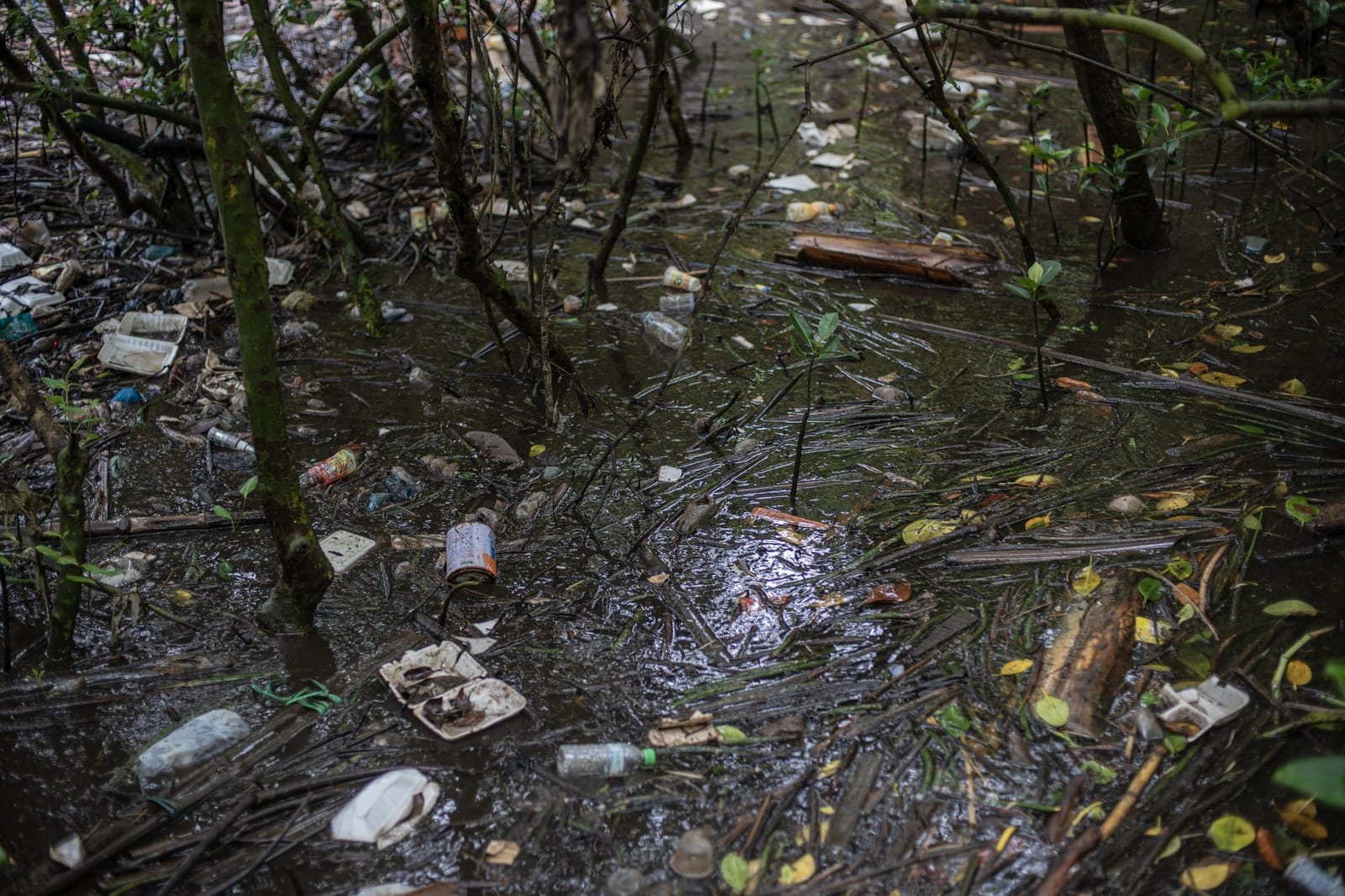 Garbage piles up at Mangrove tourism, Nguling, Pasuruan, East Java.
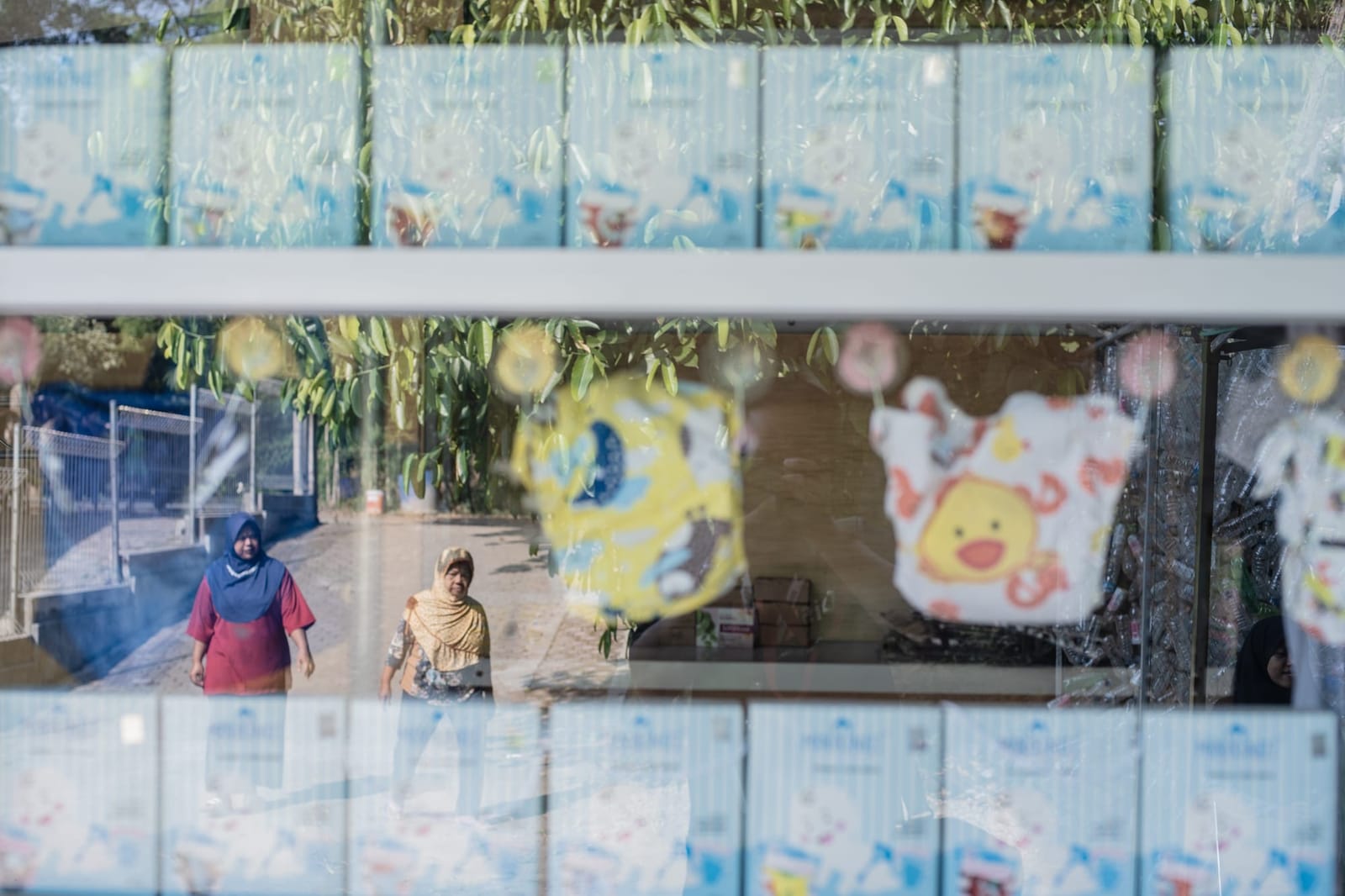 A reflection of two women in front of the diaper laundry booth at ECOTON Office, Gresik, East Java.
He said that the use of disposable diapers is still widespread in society and contributes to the government’s effort to deal with the waste problem. This is because there are still many people who believe that if disposable diapers are thrown into the temporary waste processing site (TPS) it will cause the child’s buttocks to turn red (a kind of burning), which in Javanese belief is called suleten.
“We at the Kediri City Government have carried out workshops several times to make diapers that can be washed and reused, but yes, it is difficult because it may not be practical,” added Chevy.
ECOTON once released data that baby disposable diapers reach 37% of the total waste that pollutes rivers. According to ECOTON there are three million baby diapers thrown away by people living along the Brantas watershed.
Jellyfish, Ruler of the Sea
Researchers believe jellyfish are on the verge of extinction. Not only because this species has been around for a long time, but also because jellyfish are an important prey. jellyfish are a food source for sea anemones, tuna, sea turtles, and penguins.
However, other studies have found that jellyfish are predators. It can eat fish eggs, shrimp, crabs and small plants. Jellyfish use needle-like stinging cells in their tentacles to paralyze their prey before eating it. When triggered, the stinging chamber (nematocyst) will open, allowing sea water to flow in, and release its poison.
“Jellyfish population explosion certainly affects fisheries production,” said Ramdan.
“If the fish larvae and eggs are eaten by jellyfish, the fish will not be able to continue their life so the stock of adult fish will decrease. For example, one fire jellyfish is often stranded on the shore of the South Sea Java. One jellyfish is capable of eating 120 larvae a day,”
Still in the webinar forum held by the Research Center for Oceanography-Indonesian Institute of Sciences (RCO LIPI), Oksto Ridho Sianturi, a plankton expert, stated that jellyfish are proven to be a tough animal.
“This jellyfish has experienced mass extinction 5 times. So you could say this organism is a Master of the Ocean,” explained Oksto.
WORMS (World register of Marine Species, 2020) records that in this world there are 4023 species of jellyfish.
As waters become increasingly polluted from upstream to downstream, it is not impossible that this species will increase and the worst impact will be to threaten marine diversity.
“Now with the current conditions with the high level of stress on the oceans, starting with global warming, eutrophication, researchers are worried that the current conditions will restore the jellyfish as the main predators once again like they were 500 million years ago,” said Oksto.
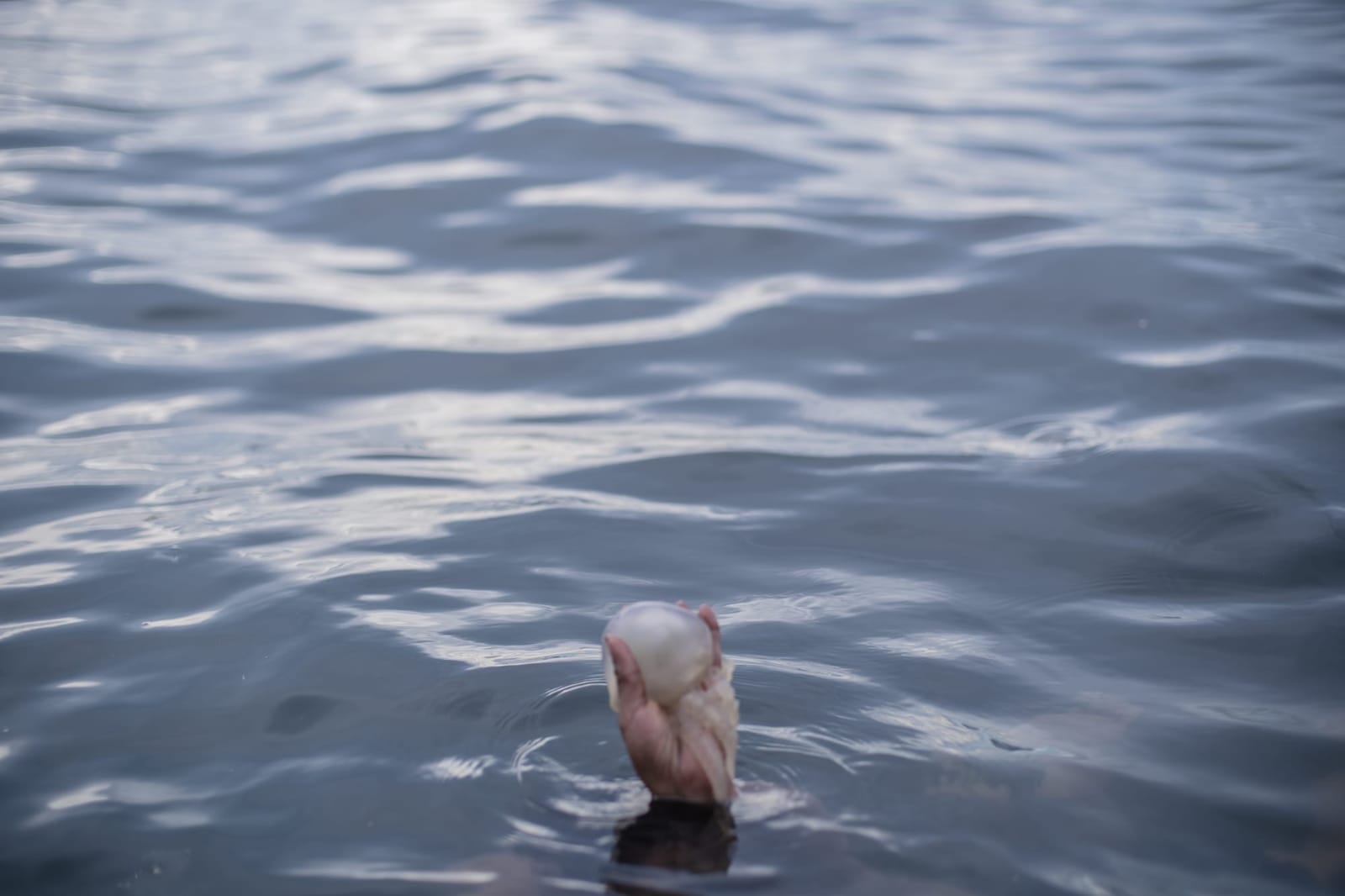 A resident hold jellyfish while swimming at Mayangan Beach, Probolinggo, East Java
This report supported by Internews’ Earth Journalism Network and first published in Project Multatuli on November 17th 2023. Hutan Hijau republished this article under a Creative Commons license.
About The Author
Arief Priyono is founder and executive director of Hutan Hijau. His work has been published by national and international media. His documentary film about orphaned children who are victims of COVID-19 won the Ruedi Hofmann Media Award at the 2021 Puskat Film Festival. Arief won the best photo essay in the People in The News – APFI 2023 category and Silver Winner – Asian Press Photo 2023. His project about Japanese internment camps in Indonesia received an Honorable Mention in the Innovate Artist Grants for Spring 2023. Recently, he received a grant from Internews’ Earth Journalism Network for covering the jellyfish population explosion in the Madura Strait, Probolinggo.
